
UNIMA CABLE | TECHNICAL DOCUMENTATION
N2XH-J / N2XH-O
TECHNICAL DATA SHEET
N2XH-J / N2XH-O | Halogen-Free XLPE Insulated Power Cable | 0.6/1 kV
PRODUCT DESCRIPTION
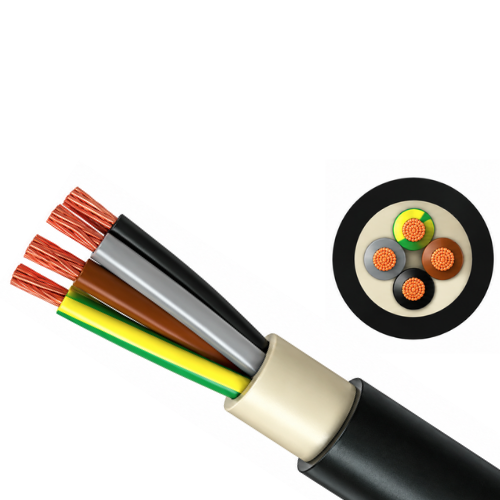
N2XH-J and N2XH-O are halogen-free, flame-retardant low-voltage power cables with copper conductors, XLPE insulation and a low-smoke FRNC outer sheath. Designed for fixed electrical installations in buildings and infrastructure where reduced smoke emission and halogen-free materials are required. N2XH-J includes a green/yellow protective conductor, while N2XH-O is supplied without one.
CABLE CONSTRUCTION
| Conductor | Bare copper, Class 1 (RE) or Class 2 (RM/SM) |
|---|---|
| Insulation | Cross-linked polyethylene (XLPE), type 2XI1 |
| Core Identification | According to VDE 0293 / HD 308 |
| Protective Conductor | N2XH-J with PE / N2XH-O without PE |
| Outer Sheath | Halogen-free FRNC compound, type HM4 |
| Sheath Colour | Crna |
TECHNICAL DATA
| Radni napon | 0.6/1 kV |
|---|---|
| Maximum System Voltage | 1.2 kV AC |
| Test Voltage | 4 kV AC |
| Materijal vodiča | Copper |
| Conductor Class | Class 1 / Class 2 |
| Insulation | XLPE (2XI1) |
| Outer Sheath | Halogen-free FRNC (HM4) |
| Sheath Colour | Crna |
| Maximum Conductor Temperature | +90°C |
| Fixed Installation Temperature | -30°C to +70°C |
| Movement Temperature | -5°C to +70°C |
| Minimum Bending Radius Multicore | 12 x D |
| Minimum Bending Radius Single-Core | 15 x D |
| Flame Propagation | IEC 60332-3-24 |
| Smoke Emission | IEC 61034 |
| Halogen Content | IEC 60754 |
| CPR Classification | Cca / Dca / Eca (variant dependent) |
| Product Standard | VDE 0276-604 |
STANDARDS
- DE 0276-604 – Power cable construction
- IEC 60332-3-24 – Flame propagation, Category C
- IEC 61034 – Smoke density
- IEC 60754 – Halogen and acidic gas emissions
- VDE 0293 / HD 308 – Core identification, as applicable
- EN 50575 – CPR classification (Cca, Dca or Eca, depending on the specific product and Declaration of Performance)
APPLICATIONS
- Halogen-free low-voltage power cable designed for fixed electrical installations in residential, commercial, industrial and public buildings.
- Suitable for installation indoors, in air and in concrete, particularly where low smoke emission and reduced corrosive gas release are required.
- Typical applications include building power distribution, electrical infrastructure, technical rooms and fixed wiring systems.
- Not suitable for direct burial in soil or installation in water.